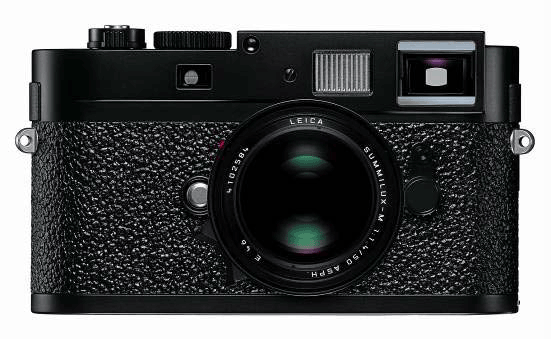
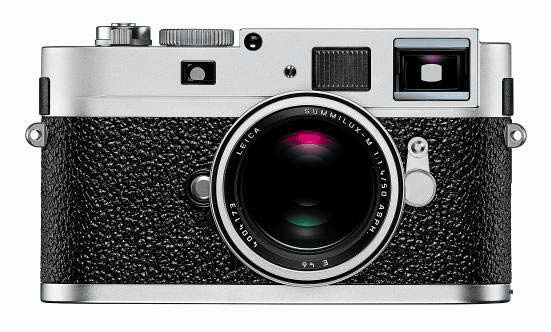
The new Leica M9-P will cost $7995.00 and will start shipping in July, 2011. Black (010-703) and chrome (010-716) versions will be available. The new features are:
- Display cover glass made of Sapphire
- Vulcanite leatherette with either a black paint top cover or a silver chrome top cover
- Pure Leica look without Leica logo and M9 lettering on the front side
- Classical “Leica” engraving on the top cover
There will be also a new silver chrome handgrip for M8.2, M9 and M9-P (catalog # 014-487) with a price tag of $300.
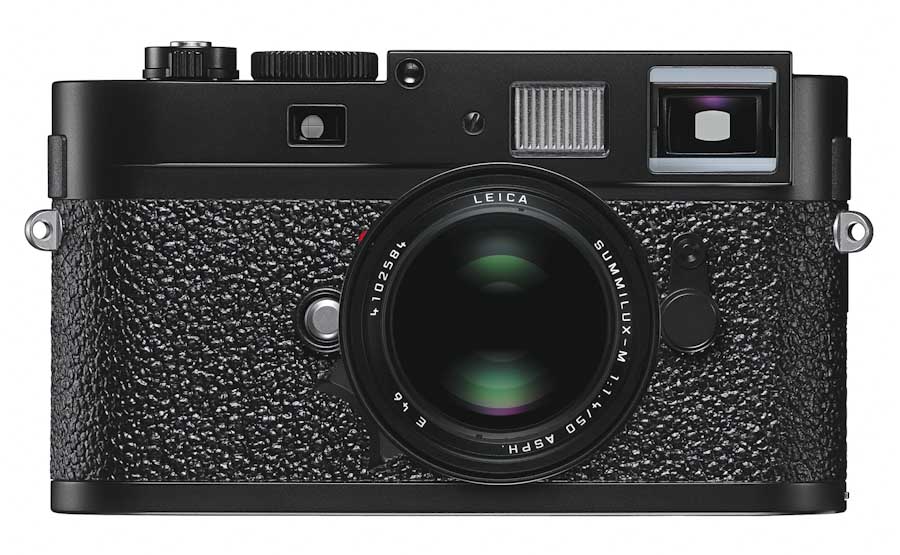
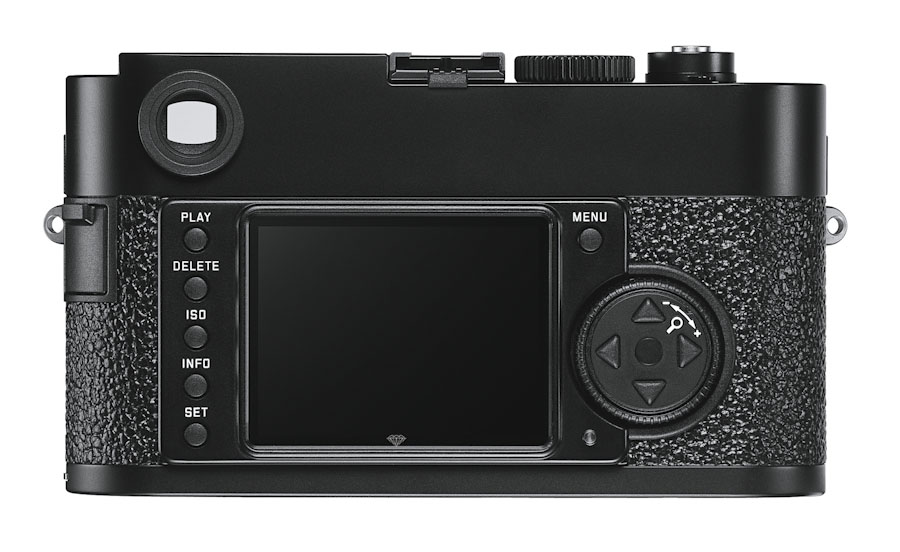
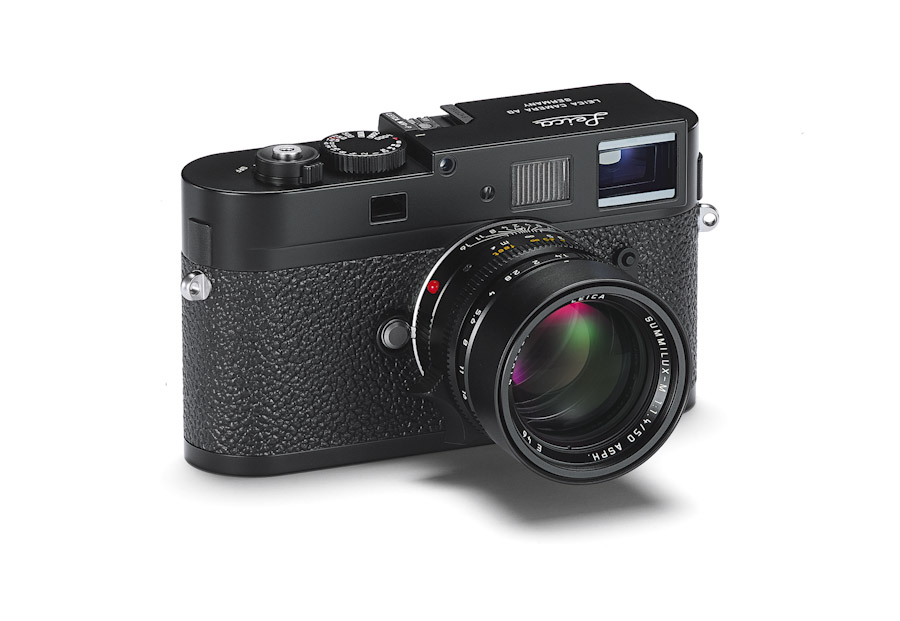
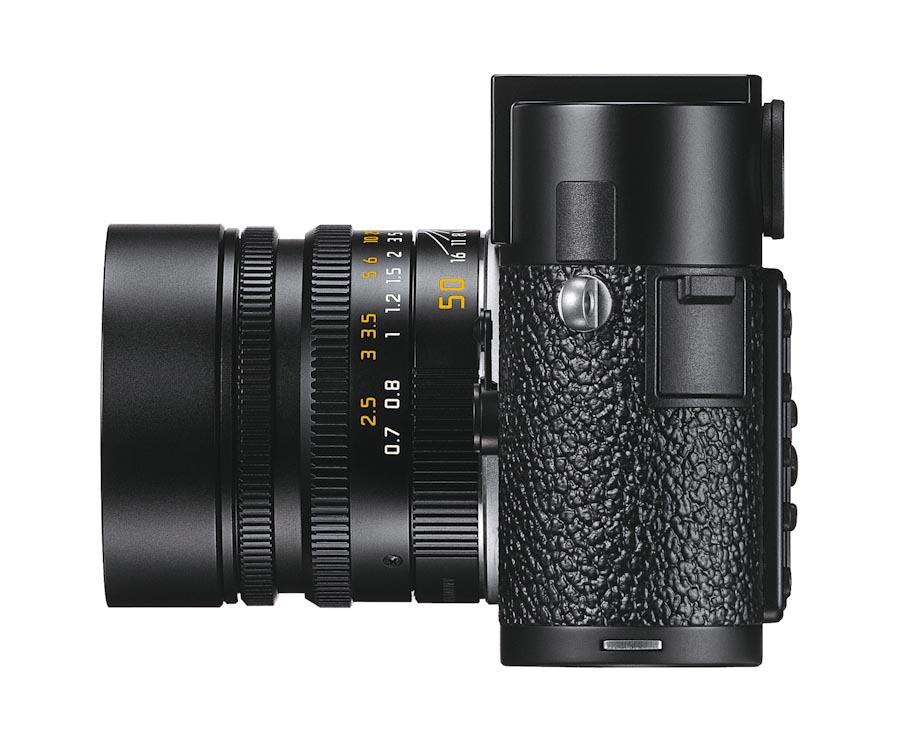
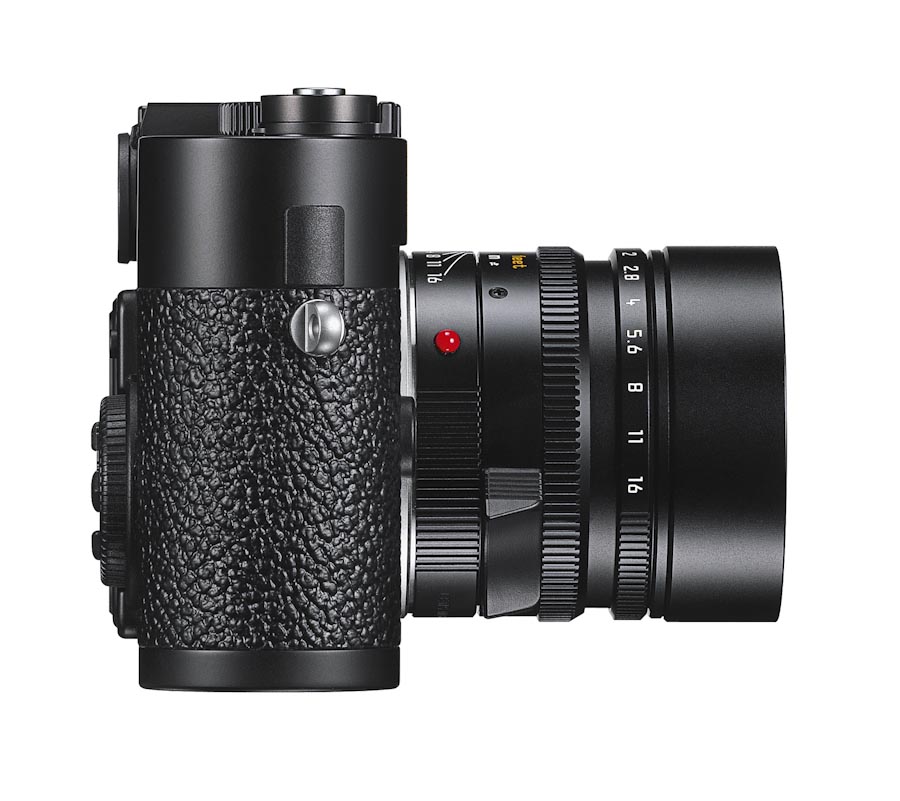
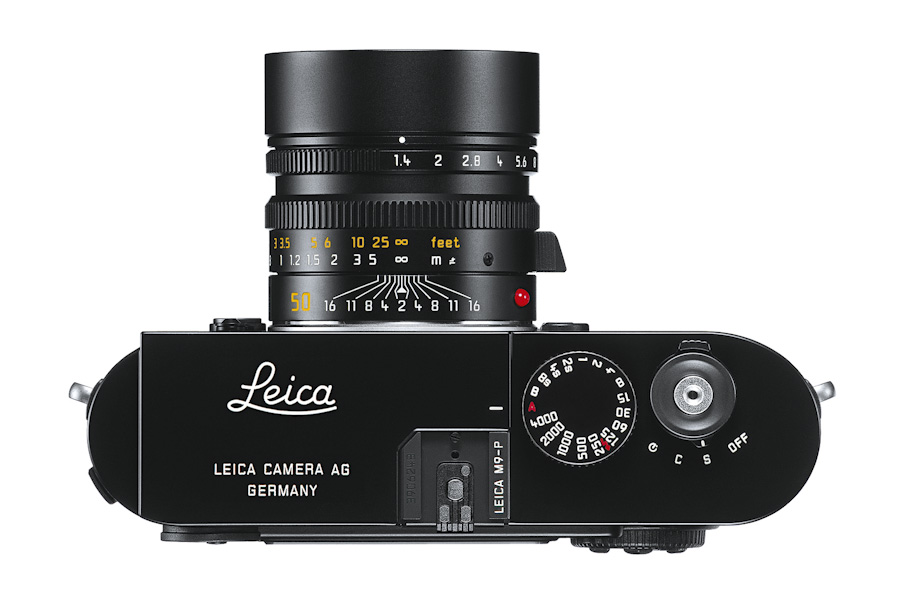
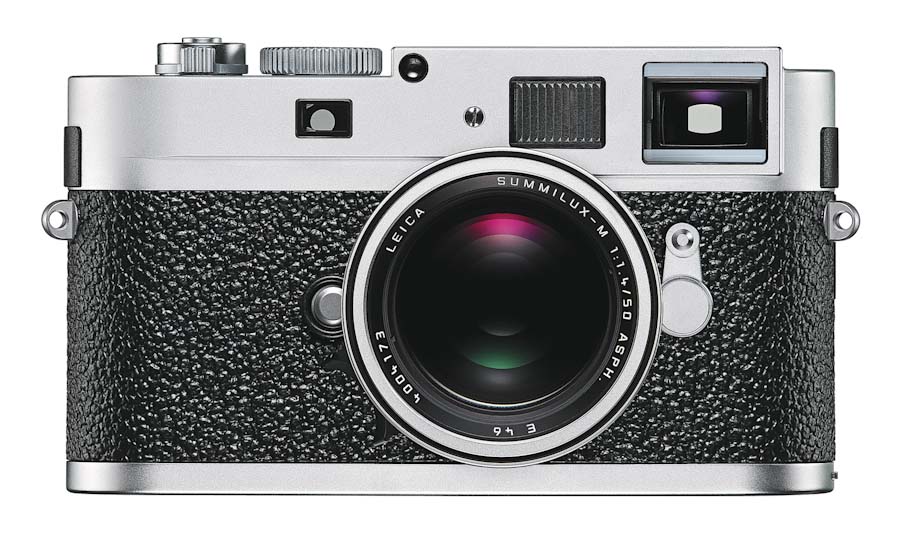
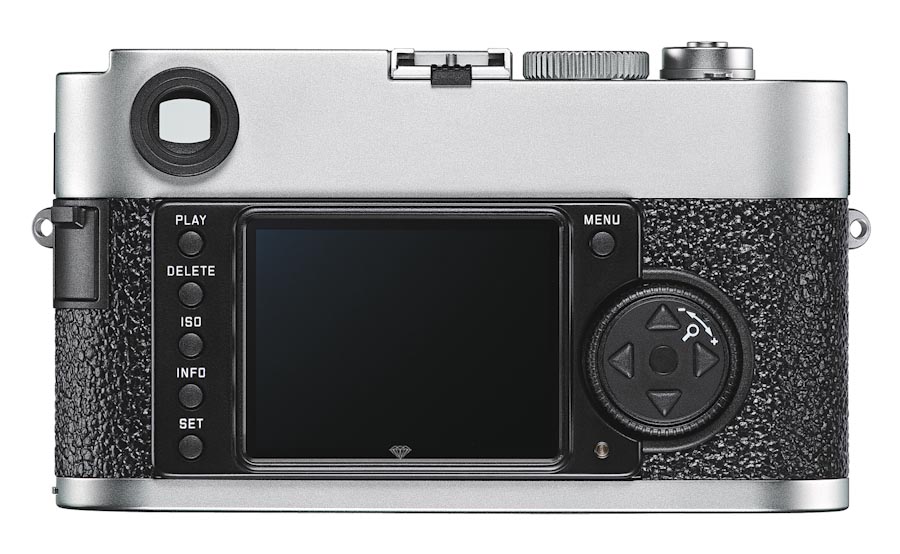
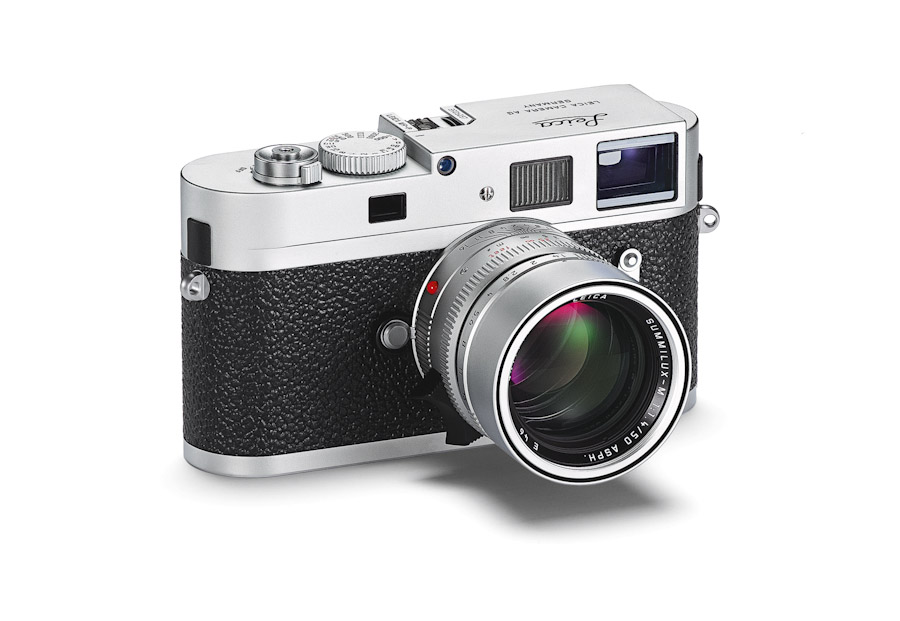
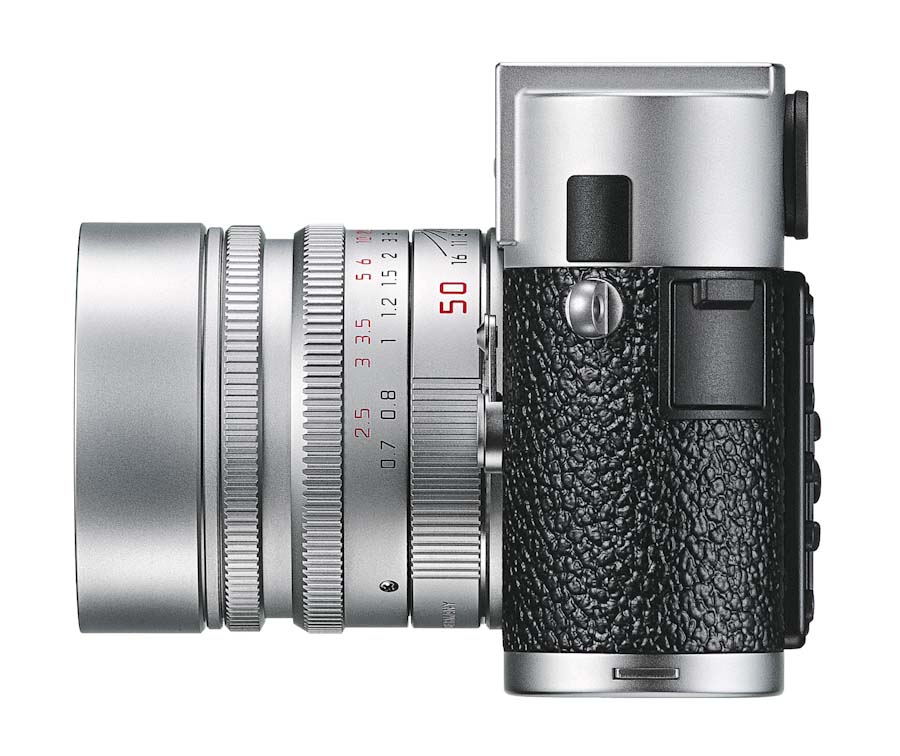
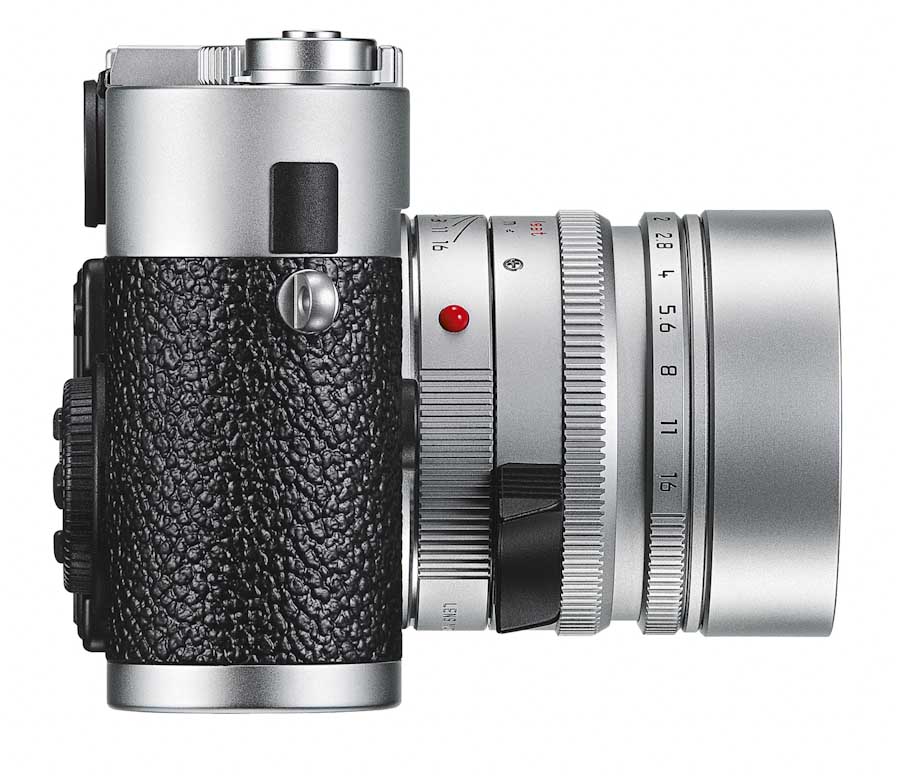
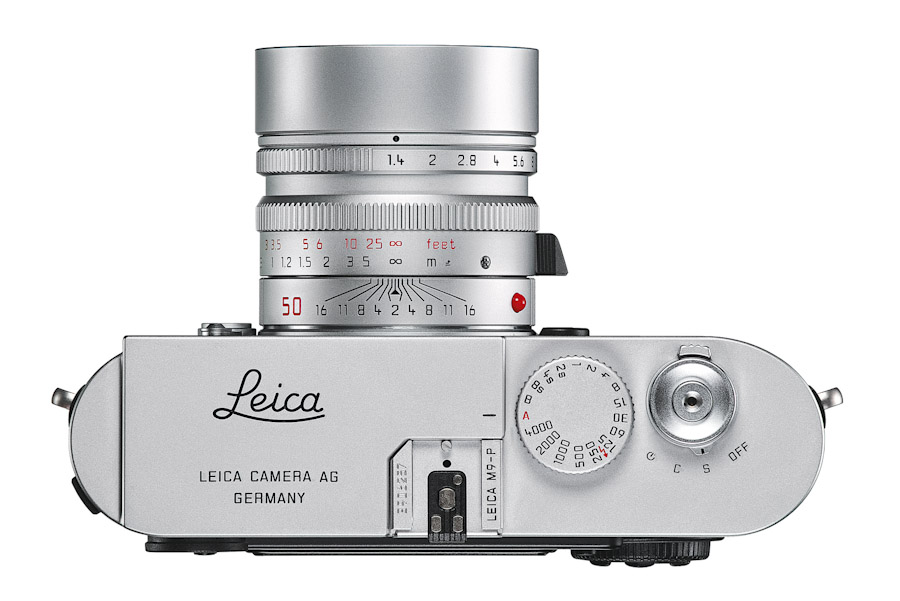
The new features of the Leica M9-P elevate the M9 further into the camera of choice as a professional tool. The new look of the Leica M9-P harks on Leica’s classic look of being unobtrusive in appearance without the Leica logo.
The display cover glass is made of Sapphire which is the second hardest material after diamond. As such the display cover is extremely scratch resistant and unbreakable. Leica is the only camera manufacturer that offers a sapphire glass as a camera display protection.
The vulcanite leatherette offers good resistivity and further provides a very good grip to the camera. The Leica M9-P is available with a silver chrome top cover or with a black paint top cover.
The Leic M9-P will include: camera, body cap, carrying strap, USB cable, battery, battery charger for 100-240 V with 2 power cords and charger adapter. Also included are the license code for download of Adboe Photoshop Lightroom, instructions German/English and warranty card (warranty period 2 years).
Full press release:
THE NEW LEICA M9-P: THE ESSENCE OF DISCRETION
Designed particularly for professional photographers, new ultra-discreet version of the Leica M9 added to Leica rangefinder portfolio
Solms, Germany (June 21, 2011) – Leica Camera AG is proud to present a new version of the world’s smallest, full-frame digital system camera: the Leica M9-P. This new model will sit alongside the Leica M9 in the company’s rangefinder portfolio. Providing an alternative, even more discreet and resilient design that further reinforces the classic nature of the M9, the M9-P specifically meets the needs of professional photographers. The new model is now available in a classic silver chrome or subtle black paint finish.
Featuring the compact size, full-frame, 18 megapixel 24 x 36mm sensor (35mm format), sophisticated image processing and robust construction of the highly successful Leica M9, the M9-P also incorporates features designed for professional users or photographers who prefer a pure, even more unobtrusive styling.
The Leica M9-P includes a scratch-resistant, sapphire crystal covering on the LCD screen. Produced using special diamond cutting tools, this screen is fashioned from one of the world’s hardest and most resilient materials. Extremely resistant to wear and almost unbreakable, the sapphire glass LCD cover offers many years of reliable use. Additionally, the anti-reflective coating on both sides of the cover improves the review of images on the display after capture, particularly in unfavorable lighting conditions.
Finished in vulcanite leatherette, the external covering of the body of the M9-P is particularly resistant to wear. This leathering features a more coarsely-textured finish that ensures a steadier grip when shooting, making the M9-P feel particularly safe and secure in the hand.
Fulfilling the needs of many professional photographers to capture the decisive moment as discretely as possible, the Leica M9-P’s minimalist styling highlights its most essential features. The Leica red dot logo and the M9 lettering on the front have been omitted and replaced with the Leica name in classic script form engraved on the top plate, making the M9-P the quintessential unobtrusive tool.
Since 1954, the Leica M-System has represented an unmistakable, individual kind of photography and a very conscious photographic style and allowed photographers to capture, document and interpret life’s fleeting moments in all fields of photography, from photojournalism, reportage and ‘available light’ to the capture of portraits and aesthetic, fine-art images. With a Leica M, the photographer becomes a ‘part of the action’ when capturing challenging, authentic and creative images. The frame lines frame precisely the shot the photographer envisages, while allowing a clear view of the scene outside the viewfinder frame.
The functions of the Leica M are consistently constructed for extreme durability and a long working life. The highest quality materials, intricate manufacturing processes and meticulous manual assembly at Leica Camera’s facility in Germany guarantee functional reliability for years to come.
The Leica M9-P will be available from Leica dealers in two different finishes, black paint or traditional silver chrome, beginning July 2011.
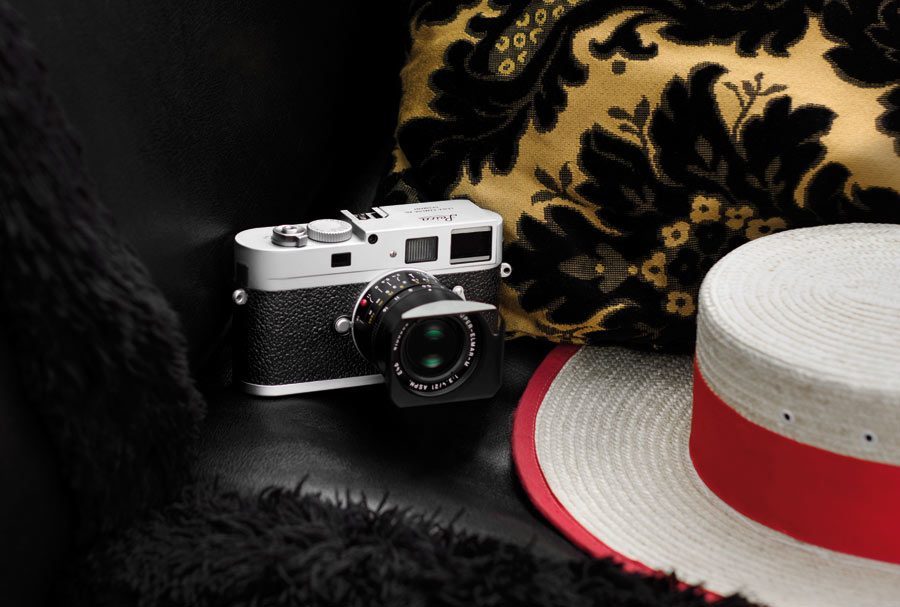
Leica M9-P specs:
| Camera type | Compact digital view and rangefinder system camera |
| Lens mount | Leica M bayonet with additional sensor for 6-bit coding |
| Lens system | Leica M lenses from 16 to135 mm |
| Image format /
image sensor |
5270 × 3516 pixels (18.5 megapixels) CCD sensor, active area approx. 23.9 × 35.8mm / 5212 x 3472 pixels (18 megapixels) (corresponds to the effective image format of Leica M film cameras) |
| Image file formats | Adjustable, DNG™: 5212 × 3472 (18 MP)
JPEG: 5212 × 3472 (18 MP), 3840 × 2592 (10 MP), 2592 ×1728 (4.5 MP), 1728 ×1152 (2 MP), 1280 x 846 pixels (1 MP) DNG™ (RAW data), choice of uncompressed or slightly compressed (by non-linear reduction of color depth), 2 JPEG compression levels |
| File sizes | DNG™: 18 MB (compressed) 36 MB (uncompressed)
JPEG: approx. 2 to10 MB (depending on image content) |
| Colour spaces | Adobe® RGB, sRGB |
| White balance | Automatic, manual, 7 presets, direct color temperature selection |
| Storage media | SD cards up to 2 GB / SDHC cards up to 32 GB |
| Menu languages | German, English, French, Spanish, Italian, Japanese, traditional Chinese, simplified Chinese, Russian |
| Compatibility | Windows® 7, Windows® XP/Vista®; Mac® OS X (10.6) |
| Exposure metering | Through-the-lens (TTL) metering, centre-weighted at working aperture.
Center-weighted TTL metering for flash exposure with system-compatible SCA-3000/2 standard flash units |
| Metering principle | Measured by light reflected by bright shutter blades on the first shutter curtain |
| Metering range (at ISO 160/23°) | At room temperature and normal humidity, equivalent to EV 0 to 20 or
f/1.0 and 1.2s to f/32 and 1/1000 s. Flashing left triangular LED in viewfinder indicates values below metering capability |
| Metering cell for available light | (continuous light measurement) Silicon photo diode with condensing lens, positioned in the bottom centre of camera base |
| Sensitivity range | ISO 160 /19° to ISO 2500/35°, adjustable in 1/3 ISO increments, with aperture priority A and manual exposure setting, choice of automatic control or manual setting, automatic control in snapshot profile |
| Exposure modes | Choice of automatic shutter speed control with manual aperture selection – aperture priority A – with corresponding digital display, or manual setting of shutter speed and aperture and adjustment using LED light balance with indication of correct exposure, or risk of over-exposure / camera shake (with snapshot profile only) |
| Flash unit connection | Via accessory shoe with centre and control contacts |
| Synchronization | Optional synchronization, on first or second shutter curtain |
| Flash synchronization speed | 1/180 s; longer shutter speeds possible |
| Flash exposure metering | (With SCA-3501/3502 adapter or SCA-3000-standard flash unit, e.g. Leica SF 24D / Leica SF 58) Flash exposure control with centre-weighted TTL pre-flash metering |
| Flash metering cell | 2 silicon photo diodes with condensing lens in camera base |
| Flash exposure compensation | ±3 1/3 EV in 1/3 EV steps, adjustable on SCA-3501/3502 adapter
On Leica SF 24D, ±3 EV in 1/3 EV steps with computer control or from 0 to -3 EV in 1 EV steps On Leica SF 58, adjustable in all modes ±3 EV in 1/3 EV steps |
| Displays in flash mode | Flash ready: flash symbol LED in the viewfinder constant
Correct flash exposure: LED constant or flashes rapidly after exposure Under-exposure: LED extinguished after exposure |
| Viewfinder principle | Large, bright-line frame viewfinder with automatic parallax compensation |
| Eyepiece | Adjusted to -0.5 diopter Correction lenses for –3 to +3 diopter available |
| Image framing | By activating two bright-line frames: for 35 and 135mm, or for 28 and 90mm, or for 50 and 75mm. Automatic activation when lens is attached. Any pair of bright-line frames can be activated by using the image field selector |
| Parallax compensation | The horizontal and vertical difference between the viewfinder and the lens is automatically compensated in accordance with the relevant distance setting, i.e. the viewfinder bright-line automatically aligns with the subject detail recorded by the lens |
| Matching of viewfinder and actual picture | The size of the bright-line frame corresponds exactly to the sensor size of approx. 23.9 x 35.8mm at a setting distance of 1 meter. At infinity setting, depending on the focal length, approx. 7.3% (28mm) to 18% (135mm) more is recorded by the sensor than indicated by the corresponding bright-line frame and slightly less for distances shorter than 1 meter |
| Viewfinder magnification (for all lenses): | 0.68× |
| Large base rangefinder | Split or super-imposed image rangefinder shown as bright field in the centre of the viewfinder image |
| Effective rangefinder base | 47.1 mm (actual rangefinder base 69.25 mm × viewfinder enlargement 0.68×) |
| Viewfinder display | (Lower edge) LED symbol for flash status.
Four-digit, seven-segment digital display with dots above and below, display brightness adjusted for ambient light, for: Warning of exposure compensation, display for automatically generated shutter speeds in aperture priority mode, indication of use metering memory lock, warning that the metering or setting ranges are over- or under-exposed using aperture priority and counting down exposures longer than 2s
LED light balance with two triangular and one central, circular LED for manual exposure setting. The triangular LEDs give the direction of rotation of the aperture ring and shutter speed setting dial to adjust the exposure. Also as warning for over- or under-exposure |
| Displays on rear panel | 2.5″ monitor (color TFT-LCD) with 230,000 pixels. M9-P LCD with sapphire crystal |
| Shutter | Microprocessor-controlled, exceptionally low-noise, metal blade shutter with vertical movement |
| Shutter speeds | For aperture priority (A) continuously adjustable from 32s to 1/4000s. For manual setting 8s to 1/4000s in half steps, B for long exposures of any duration (in conjunction with self-timer function, i.e. 1st release = shutter opens, 2nd release = shutter closes, (1/180s) fastest shutter speed for flash synchronization |
| Shutter cocking | Using low-noise integral motor, optionally after releasing the shutter release button |
| Series exposures | Approx. 2 frames/s, ≥ 8 frames in series |
| Shutter release | Three levels: Exposure metering on – Metering memory lock (in aperture priority mode) – Shutter release
Integrated standard cable release thread |
| Self-timer | Delay optionally 2 (aperture priority and manual exposure setting) or 12s (menu setting), indicated by flashing LED on front of the camera and corresponding display on the monitor |
| Camera power on /
power off |
Using the main switch on the camera’s top panel, selectable automatic power-off for camera electronics after approx. 2/5/10 minutes, reactivation by pressing the shutter release button |
| Power supply | 1 Lithium-ion battery, nominal voltage 3.7 V, capacity 1900 mAh
Capacity display in monitor, when shutter held open (for sensor cleaning) additional acoustic warning when capacity is low |
| Battery charger | Inputs: 100–240 V AC, 50/60 Hz, automatic switching, or 12/24 V DC
Output: 4.2 V DC, 800 mA |
| Camera body material | All-metal die-cast magnesium body, KTL dip painted finish and synthetic leather covering. Top plate and base plate in brass.
M9: black or steel-grey paint finish M9-P: black paint finish or silver chrome version, LCD with sapphire crystal |
| Image field selector | Allows the bright-line pairs to be manually displayed at any time (e.g. for framing comparisons) |
| Tripod thread | A 1/4 (1/4 “) DIN, stainless steel, integrated in base plate |
| Operating conditions | 0 to +40°C |
| Interface | 5-pin Mini-USB 2.0 high-speed socket for fast data transfer |
| Dimensions (W x D x H) | Approx. 139 × 37 × 80 mm (Approx. 5.47 x 1.45 x 3.15 in) |
| Weight | M9: 585g (Approx. 20.64 oz) (including battery)
M9-P: 600g (Approx: 21.16 oz) (including battery) |
| Accessories included | Battery charger 100–240 V with two mains cables (EU, USA, may differ for other markets), car charger, Lithium-ion battery, USB cable, carrying strap, body cap, instruction manual. Software: Adobe® Photoshop® Lightroom® 3 (downloadable – license code included) |
More details at Leica-camera.com.