// EOSHD published an interview with Jesko Von Oeynhausen from Leica on the video capabilities of the new Leica M camera. Here is a recap of the main points: "To scale 24MP down to 2MP for 1080p we do not just line-skipping, we average pixels. It is not pixel binning or anything like that". There is [...]"/>

Welcome to 2012: Leica M as a filmmaker’s tool

EOSHD published an interview with Jesko Von Oeynhausen from Leica on the video capabilities of the new Leica M camera. Here is a recap of the main points:

  • "To scale 24MP down to 2MP for 1080p we do not just line-skipping, we average pixels. It is not pixel binning or anything like that".
  • There is no AA filter in the Leica M.
  • The Leica M has full manual control in video recording mode.
  • No HDMI output for video.
  • "Rolling shutter effect is not too bad"
  • Video recording is limited to 4GB files or 29 minutes.
  • Codec: Motion-JPEG, bitrate: 40Mb/s, 422 subsampling.
  • Focus peaking with zoom-in function.
  • Simulated exposure in live view with half-press of the shutter.
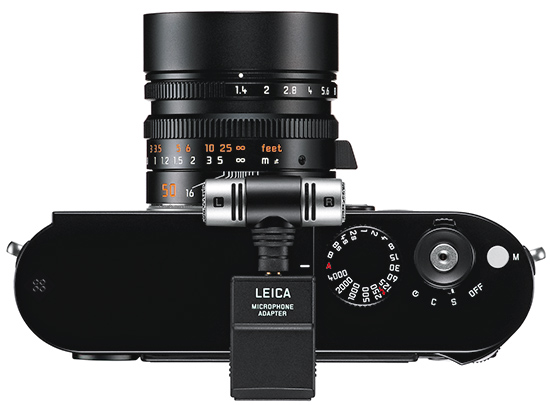
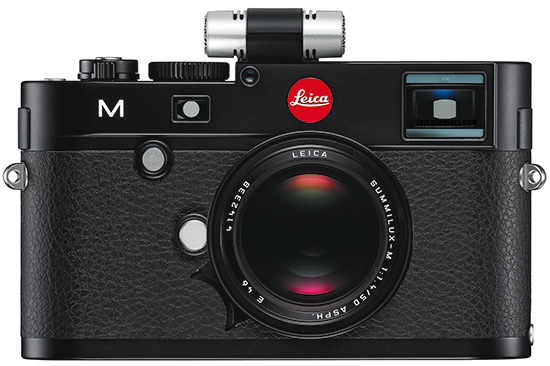
  • Leica M has a built-in mono microphone and an optional microphone adapter (pictured above).
  • Manual audio control is available with on-screen levels.
  • There is a dedicated video recording button on the top plate (marked with "M" on the picture).
This entry was posted in Leica M. Bookmark the permalink. Trackbacks are closed, but you can post a comment.
  • Bryan Campbell

    I would love to see the Leica M version of Reverie with Leica’s best lenses when it comes out :)

    • http://haroldellis4444@gmail.com Harold Ellis

      ultimate hipster movie tool

      • Hipster

        At last. I can make perfectly sharp 2 hour films of an eye blinking.

      • camerageekslayer

        Who are these hipsters with Leica’s your talking about? Where do they live? More ridiculous comments from Harold Ellis. Why don’t you actually try talking about the camera for a change and how it relates to photography or cinematography instead of just making non-sensical comments?

  • http://www.fredfacker.com Fred Facker

    A bit off topic, but will the 50mm Summicron DR be usable on the new M or will it still be a film only lens?

  • kede

    dslr video revolution came from the quality of the 5d mkII video regarding of the price. if a filmaker as 10k€ to get a video camera that would’nt be the leica M. They did’nt understand the point. Anyway, really nice camera!

  • arufa

    “4:2:2 bitrate codec” is an incorrect description.

    It should be:

    Codec: Motion-JPEG. Bitrate: 40Mb/s. 422 Subsampling.

    An averaging algorithm is fine for downsampling, it’s better than nearest neighbor (aka line skipping, binning) but will be blurry (just the nature of the algorithm).

    Codec support is disappointing. Motion JPEG is inferior to H264 AVC in terms of compression ratio. 40Mb/s should give good picture quality but it will fill up storage very quickly..

    • http://leicarumors.com LR admin

      will update the specs, thanks

    • Eric

      You are correct. They should do h.264. Motion jpeg is a non starter. But then this really shouldn’t be a video camera at all. Save money and fewer things to go wrong.

      • http://www.jgharding.com JGHarding

        Motion JPEG has benefits over AVCHD, the most important of which is that as an I-frame codec has superior motion cadence compared to long-GOP codecs like AVCHD.

        This also means you don’t get the horrible “collapsing image” artifacts when moving quickly. AVCHD spec is pathetically low bitrate these days. Even AVCHD2 at 28mbps isn’t very nice.

        I really dislike AVCHD noise patterns, and would always pick an I-frame over long GOP for film-like look

  • Banksie

    When we needed a small footprint B camera we used to use an Aaton Minima with 200′ loads. Sound was always separate and with a sound recorder (top quality audio is key to any successful production.) Today, a modern HD capable DSLR is a bit smaller (after allowing for a rig and follow focus gearing.) So, the HDSLR form factor (with a comprehensive aftermarket of rigs and harnesses, and follow focus for Zeiss and Canon lenses) is what a film maker wants. It’s small enough without being so small that it becomes difficult and frustrating to use.

    In reality, the M form factor is just too small for real world professional use. The M lenses are too small for follow focus or a matte box, and the focusing throw isn’t right, either. Plus you have those clickety type of f stops instead of smooth iris control (and in T stops.) You’d pretty much be resigned to R lenses. I kind of doubt there will be any real aftermarket support either, like rigs, etc.. I’m sure there will be film makers and video artists who will make some short productions by trying out the M (and also as Leica spokespersons and part of Leica marketing ads), but it’s just not a great tool for film making when you have so many other much more practical choices. Remember that a HDSLR is tiny in a cinematographer’s world and mindset; they are used to dealing with several large cases of equipment on set. The HDSLR is great for mobility and places with difficult access.

    Plus most all production houses rent equipment. I really doubt that the production rental companies (except maybe a place like Abel Cine Tech but I doubt that, too) will stock Leica Ms and lenses as part of their rental programs. Using the M in a production by a skilled cinematographer will be more like experimenting with it just for the sake of it, although an iPhone can be effective in the right hands, too. But the lens quality is already there in cine lenses (esp with Zeiss primes and Cooke, etc.), so the optical quality isn’t going to be any sort of big game changer with the M.

    Leica added video because they had to. And it was a good move. If they didn’t add it, it would have disappointed a lot of potential buyers. It will be of benefit to hobbyists but also for some journalistic and documentary works and certain commercial ventures. Adding video along with still imagery can often be an effective communication tool.

    • http://nilsfoto.com robert callway

      totally agree with you banksie….it’s an awesome stills camera but for pro video…meh.

      leica need to come out with a dedicated digital movie camera with a red dot…hang on it’s called REDONE/EPIC!

      • http://nilsfoto.com robert callway

        ps…it needs a headphone jack as well

    • Nick

      I know nothing about (and have little interest in) videography, but I have a big interest in Leica getting things right so they can keep making lenses for me to hang on my M6 (and ME when I get it). It’s really interesting, therefore, to hear somebody who seems to know what they are talking about discuss the video potential of the M.

      I guess Leica figured that they may as well stick it in there if they went to CMOS (which I am sure they did primarily for the high ISO improvement made possible, with the R solution and live view being a nice bonus) and it became possible to support it. Makes them look “modern” and ticks a box. Sad it’s so crippled though. I wonder if they will bother to improve that in time?

    • Markus

      I totally agree with you, Banskie!

    • camerageekslayer

      Very well thought out comment and I totally agree with you. I would have preferred video left out of the M completely if for any reason other then I don’t think there was much demand for it from their core shooters. By doing so they have completely changed the makeup of the M ( don’t dig those microphone holes on the top). All that said from the samples I saw the video looks to be pretty damn good so if someone did want to experiment they would probably come out with something worthwhile if they could overcome all the obstacles you listed.

  • Ronan

    This doesn’t make a good filmmaker tool, at all.

  • Randolph

    The Leica M will be the ultimate filmmaker’s tool. The precision craftsmanship of the Leica brand meshes perfectly with the artistic vision of the cinematographer. The intimacy possible with rangefinder focusing and the precision touch of Leica’s manual focus lenses produces a synergy with the subject, allowing private moments to be effortlessly brought to the big screen. Rather than saying “action!” the Leica filmmaker merely touches the record button and becomes one with the scene around him. Reaching for the film-advance lever, but finding only the individually hand-burnished German vanadium steel alloy top plate, he resigns himself to portraying the inferior world around him with shallow depth of field to satisfy his aching desire for nothing to be less than opulent.

    • visitor

      Randolph, whatever you took before you wrote this, make sure to take a tiny bit less of it next time. Wow.

    • Hipster

      YES! I agree, now films concerning my cat will be tre magnifique.

    • crikes

      Uhh ha… Randolph, what are you on about?

    • S_O

      Eh?

    • Alan

      @Randolph: you are now hired for all of Leica’s web site and brochure copywriting. And a resident LFI contributor. Magnificent spoof, even though you failed to mention the “absolutely unique ability to capture the onfolding essence of the decisive moment” ! ;-)

      • Randolph

        Thank heavens someone got the joke.

        • Banksie

          I think we all did. Except for the three posters who seemed befuddled by it all ;-)

  • Hipster

    Leica M for making films.

    Hasselblad Luna for photography.

    What could be better?

    • Randolph

      Swabbing my posterior in the lavatory using diamond-grit sandpaper.

  • skinnfell

    This is not a pro video camera by any means.
    However it is a godsend for people like me: photojournalists who find customers are increasingly asking for video clips to go with the story. They do not expect full-fledged documentaries, nor is this camera intended to do so.

    It will allow me to get rid of my Canons (5d2+5d3) which I until now have kept solely for video, long lens, macro and rainy day work. The M can now do all of those things – WITH leica optics. (I did not do sports anyways).
    That liberation is easily worth the price of the camera.
    R lenses are (still) abundant, and we will probably see longer and more technical lenses in M mount in the future.

    Heck, why not a leica Cine lens in M mount?

    Manual focus? I dont trust my canons for critical shots unless I open up live view at 10x and focus – manually.

  • R!

    Sounds like a 5DMRKIII killer to me,still!!!!noctilux video will be the less noisy on the markett for sure,the downscalling sounds nice alsp!?.

    • R!

      Leica bokeh is unbeaten also.

  • Daryl

    Just a question, I am not a cinematographer. The Leica Noctilux and Summilux lenses have a unique character, wouldn’t these be sought after for video?

    • Banksie

      Daryl, these would make much more sense over using any existing Leica M lens: http://www.arri-rental.com/camera/lenses/35mm-prime-lenses/leica-summilux-c-primes.html

      And as far as unique lens character, we already have Cooke S4 primes available, too. http://www.cookeoptics.com/cooke.nsf/products/s4i.html

      Unless the M will have a secret magical sensor that out does anything already available (like the Red Epic 5k), I’m not sure why one would feel that compelled to need to use a Noctilux on the M for film making. If the Noctilux could be modified to the PL mount (to use on real cine cameras) and had some iris and focus mods done to it to make it useable (no doubt impossible or at the very least way too expensive), then maybe. But that’s not going to happen and which is why Leica built the Leica Summilux-C primes.

      The M camera as a filmmakers tool for production (which is the question posed in this article) will be limited only to certain venues as I’ve already mentioned (e.g., photojournalism to add motion imagery to the existing stills and for the hobbyist.)

      And Hot Rod Cameras have long ago developed the Canon cameras to accept PL mount lenses. http://birnsandsawyer.com/_Camera-Rentals/HD-DSLR/Canon-EOS-7D-PL-Mount.aspx This is considered a very small form factor in the cinema world.

      You can mount Cooke S4 primes (or Leica Summilux-C or Zeiss Master Primes, etc..) and get not only a full set of color matched primes with extraordinary warmth, contrast, and resolution but also with smooth roll in and out of focus. The aperture rings of a good PL mount cine lens are as smooth as soft peanut butter, and witness marks are 100% accurate. Those physical attributes (iris and follow focus) are so important. And the Cooke primes have their iTechnology with means camera and lens data (focusing, T stops, DOF) is embedded in each frame to facilitate post production work. There’s also a small circular matte behind the iris that allows you to switch from the traditional Cooke ‘flower style’ bokeh to a round iris bokeh.

      Those are the things that are really more needed for a successful production. The Leica M with a Noctilux will no doubt produce some interesting motion imagery, but it won’t ever be a “filmmaker’s tool” just due to its physical limitations and use factor.

      • Drew

        You can already use Leica M lenses on the Red via a $700 adapter: http://www.red.com/store/products/dsmc-al-leica-m-mount

        Here’s the Noctilux 50/0.95 on Red: http://vimeo.com/8274003

        And, of course, you can use the M lenses via an adapter on the Panasonic GH3.

        • Banksie

          Drew, that was mentioned a while back here on Leica Rumors.
          http://leicarumors.com/2011/12/03/red-camera-leica-m-lenses.aspx/

          I think you do have to have a new frame mount using the most current OLPF installed to avoid gate flare.

          Back then someone posted this: “…..no follow focus capability…can I ask…why? If you’re spending RED money I’m sure the Cooke or Zeiss cine primes would give any M lens a run for it’s money.”

          I personally kind of tend to agree. And I haven’t seen or heard of anybody do any major production work with a Red and M lens. Except for people experimenting with various lenses (not just Leica) for certain looks and as additional footage, etc.. But the versatility and use factor of PL lenses seems to always win out.

          Do you have any references to actual productions made with an M lens? The clip posted was two years ago. That same person used a Leica R using an adapter to the M Red mount: http://vimeo.com/8281567 But using R lenses has been relatively common in the Red community and there is a R to Red direct mount. Cine Camera Mods in Australia has been making several mounts for the Red and Canon (although not Red approved, afaik.) But nothing for M.

          The M lens in a PL mount would be superfluous (not to mention incredibly expensive and maybe not even physically possible) since the Leica C lenses exist. Having a Noctilux for low light would be interesting (although the Leica C lenses are 1.4) but I’d like to see what anybody has been doing with it on a Red and if the “look” of the Noctilux (aside from iris size and DOF) is really a deal maker. I haven’t seen anything (although I’m not part of the Red community.) Post more if you have anything.

          • Drew

            Here are a few other videos that come up with a “Red Leica M” search:
            http://vimeo.com/36294150
            http://vimeo.com/44434153

            I wouldn’t be surprised if most of the M lenses on Red camera usage fell into the “I wonder what it would look like?” camp, as opposed to actual, practical usage. I don’t really follow this community either.

    • Daryl

      Thanks Banksie and Drew, it’s interesting to learn about the cinema side of things.

    • http://leicarumors.com LR admin

      Yes, Leica even has a separate cinema lenses:

      http://leicarumors.com/category/leica-cinema-lenses/

  • Drew

    Apparently, some feature films have been made using modified Leica M lenses, specifically a scene in “Hanna” was done with a 50/0.95 modified to a PL mount, with click-stops removed:
    http://www.reduser.net/forum/showthread.php?66048-DSMC-Leica-M-Mount/page14&p=905073#post905073

    Poking through the threads on the M-mount (http://www.reduser.net/forum/showthread.php?77189-Leica-M-Mount) it seems that most M lenses of 50mm and shorter won’t work due to the lens protruding past the mount. The Red M mount was built with the 50/0.95 in mind, but some 50′s won’t work. The last page of that thread shows a 50/0.95 mounted on a Red (can’t tell if it’s an Epic or Scarlet)

    Since wide angle M lenses can’t be used on the Red, the M (240) just might be the tool for cinematographers who want to use a specific Leica wide angle M lens. Based on some of the comments in that thread, there does appear to be an interest in doing professional video with M lenses. I’m surprised too. Maybe Leica will sell quite a few M (240)’s to this market? We’ll just have to wait and see.

    • Banksie

      Thanks, I saw that thread some time ago but missed that particular post, I guess. I wonder who did the conversion, the linked articles don’t say. I also wonder what it costs. There’s a mention on that thread about Arri London doing it and supplying the lens but I can’t find it on their website or anywhere else. There’s not a lot of specific info in that post unfortunately (and the guy who started the thread appears to be banned from the forum now.) And since then the rush towards experimenting with M lenses on the Red seems to have died down a bit. (I did read that Jannard announced they are working on being able to use wider M lenses once they get the issue of the rear extended element figured out.)

      And on that thread are these comments by senior members including someone from DigitalFX post services:

      “M lenses are designed for Leica’s rangefinder cameras, they are very small and not ideal for cinematography.”

      “I second that the M-lenses are great lenses, but in general not perfect for cinematography. They are too small and it’s difficult to attach any FF or even pull focus by hand. If you want Leica glass, go for R-lenses (and have them cinefied by Duclos). But hurry, with the new M-adapter by Leica they are in high demand again and harder to find by the day.”

      “Leica’s are so much FUN on EPIC but I need Cine Primes so to fit our workflow properly.”

      And again, I tend to agree with that sentiment. But if one is into experimenting to get a certain look for some footage (and having fun doing so), then it’s always great to have these choices. Like doing a scene from the Hannah film where lots of lenses were used in the production including Cooke, Zeiss, and Angenieux (and on both film stock and HD digital capture, too.) And I imagine somebody might use the M240 for some footage eventually in a feature film someday. But I’m curious as to how the new M sensor will render in respect to everything else that’s available these days.

  • Alan

    From a strict amateur videographer point of view (no video rigs): judging by the pics here, we’d have to choose between EVF and stereo mic. Correct?

    • Daryl

      Correct. The grip has a spot for a pc connection, a ttl flash connection, a usb 2 port, and a power option. Maybe in the future Leica may add something for an external mic to the grip, or other means.

  • Camaman

    Rolling ahutter looked pretty noticeable to me in that first demo video.
    I am not a videographer but even I noticed it.
    Maybe as a tripod, fixed nature cam it will shine…

  • R!

    You can get the best moovie with a real cinema camera and some cine zeiss or cine leica lenses ,if your production budget is unlimited or almost like hollywood production $,for sure.The success of 5DMRKII ,REDs and GH1&2 is due to the”cheapest”cost of almost professional footage reach by those tools!
    So we can’t compare pro cinema tools with photographic camera ,It’s just amazing to be able to get almost professional moovie without the need of paying more than a kidney or a liver to get a descent image.
    The Leica moovie anouncement is a great news and I use to not like M camera before this,now I can say :BRAVO LEICA.

    • R!

      …still waiting on a real R 10 !

  • porkchop

    Just another overpriced jewlery type camera from leica. Now the EOS 1dc is a real camera not this heap of pig slop. Leica is a joke.

    • camerageekslayer

      Yeah and the EOS is like having a small Eastern European car strapped to your neck. I don’t love that there is video on the M but that doesn’t make it shite. Obviously you don’t know much about cameras outside Canons or Nikons but if you ever do want to learn about photography people like Banksie will be here to teach you.

  • John

    Did anyone notice that the magnification default is .68 and not .72 like on the M7?

  • dom

    M lenses are similar in size to 16mm lenses. Leicina is back!!! Well, sorta. Anyone who would dress this up in matte box and follow focus etc would be missing the point. It’s a very specific tool, which cold be ideal for low light hand held image making. To spurn video in the current context is almost being a bit of a luddite!
    To not have a camera that is video capable in the range is a lot less logical than having a digital monochrome camera in fact (what with Beyer pattern sensors).
    It’s an almost perfect director’s tool. If I was scouting locations, padding round places looking for inspiration for a movie, this would fit in a bag with a few lenses perfectly. For the photojournalist covering a story these days, being able to generate video clips is part of the job.
    Lets be honest, part of the success of Leica is its sentimental connections with the romantic image of the old photo journalists, the likes of magnum photographers, but they made films.

    I only worry about rolling shutter. The glimpse of the video footage that I did see was a bit of a concern.
    In its favour this camera has: EVF, peaking, Small lenses, amazing lenses, 4.2.2 colour space, lower compression, pixel averaging, no olpf.
    I think it’s an interesting proposition – hardly going to knock a dedicated digital cinema off top spot, but I think I’d rather use this than a lot of DSLRs for video.
    As a film maker i’d me more interested in one of these than a canon 1dx which is the only other DSLR that I know of that uses pixel averaging, and they’re not terribly differently priced. They are both very specific tools that are wildly different in every other way.

  • Back to top