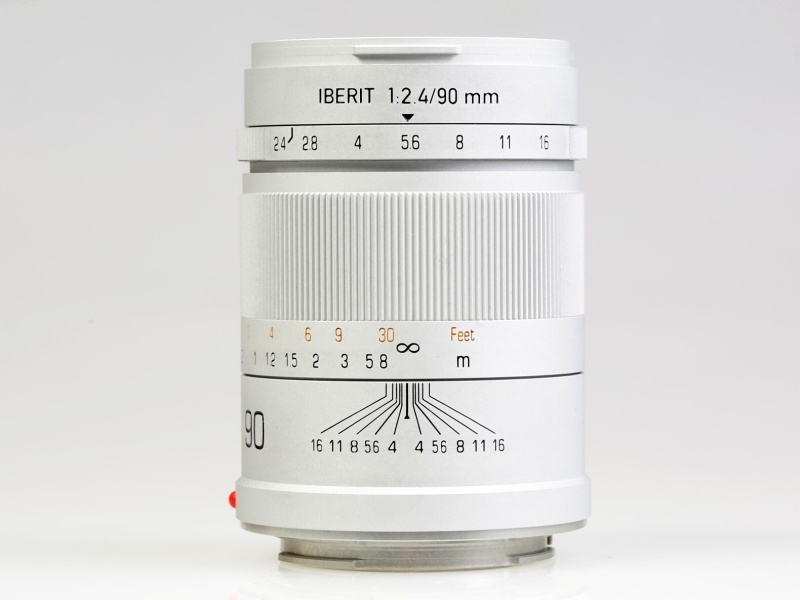
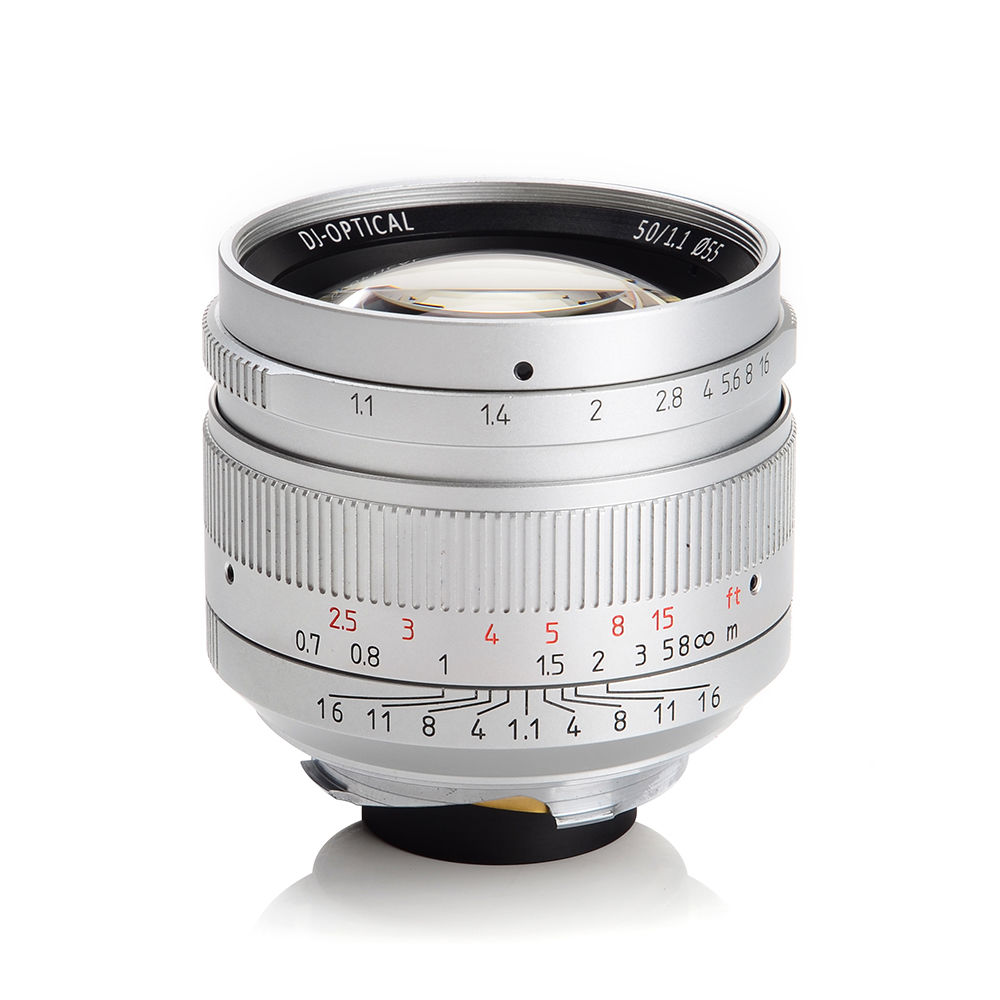
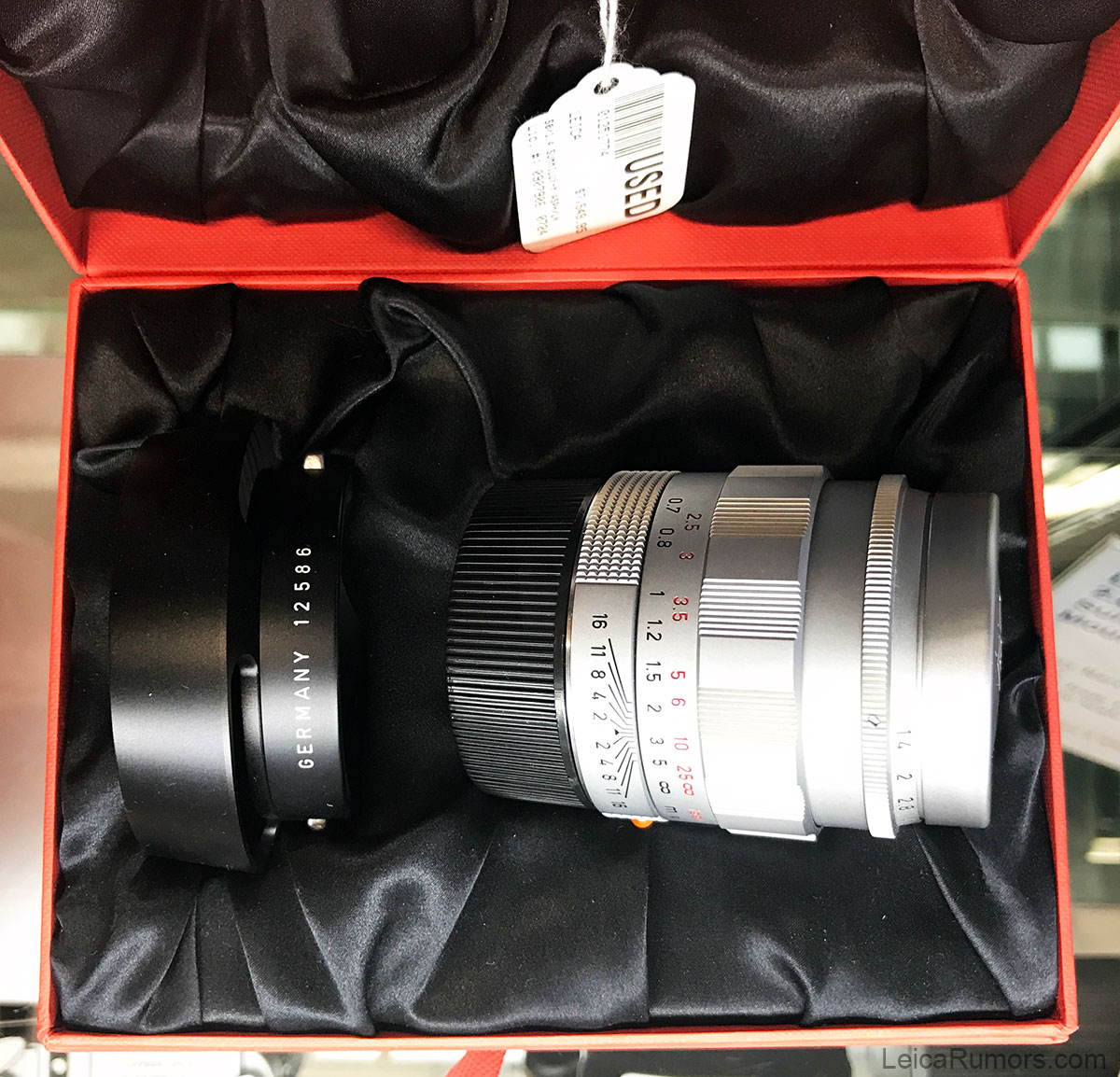
The Handevision IBERIT 90mm f/2.4 lens is now shipping (the other IBERIT lenses have been available for a while). The lens is available for both M (rangefinder coupled) and SL/TL mounts (as well as other mirrorless mounts).
Check pricing, colors and pre-order options at B&H and Adorama.
Here are the technical specifications for the M version:
Focal Length
90mm
Aperture
f/2.4 to f/16
Camera Mount Type
Leica M
Angle of View
27°
Minimum Focus Distance
2.3′ / 70 cm
Optical Design
4 elements in 4 groups
Diaphragm Blades
10
Focus
Manual
Filter Thread
49 mm
Dimensions
2.3 x 2.7″ / 58 x 69 mm
Weight
9.9 oz / 280 g
Short telephoto prime designed for full-frame and 35mm Leica M-mount rangefinder cameras.
Simple four elements, four groups optical design provides a classic image quality that is also well-suited to use on current image sensors.
Manual focus design permits working with subjects as close as 2.3′ away.
Engraved focus distance and depth of field scales benefit working with pre-focus and hyperfocal focusing techniques.
Ten diaphragm blades contribute to a pleasing bokeh quality.
All-metal construction uses anodized aluminum, brass, and stainless steel components to render a physically durable design that is also lightweight and easy to handle.
Exterior diameter of 58mm is consistent throughout the entire IBERIT lens lineup.
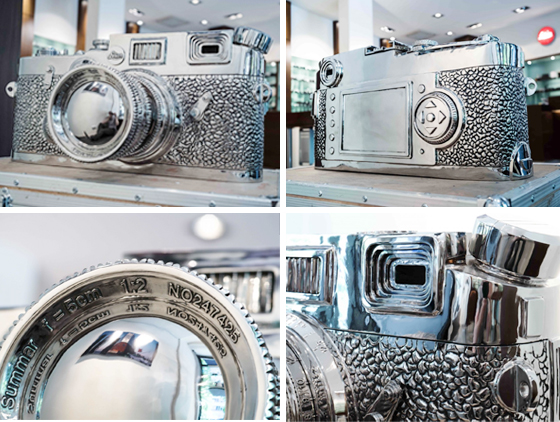
→ “Fake Leica” by Liao Yibai has been listed for sale at Meister Camera / Leica Store Hamburg for €100,000:
This Leica weights about 40kg and is made out of stainless steel. The size of the sculpture is ca. 41 x 81 x 46cm (17 5/8 x 32 1/4 x 191/4 inches) and has got serial number 6/12. It comes with the wooden crate included which is especially designed for shipping this sculpture. One similar “Fake Leica” sold at Westlicht Auction in November 2013 for Euro 96.000. There are more and different models of the Fake Leica such as one gold plated, a black paint fiberglass and 3 giant models of wich one was bought by the museum of the Leica Camera AG.
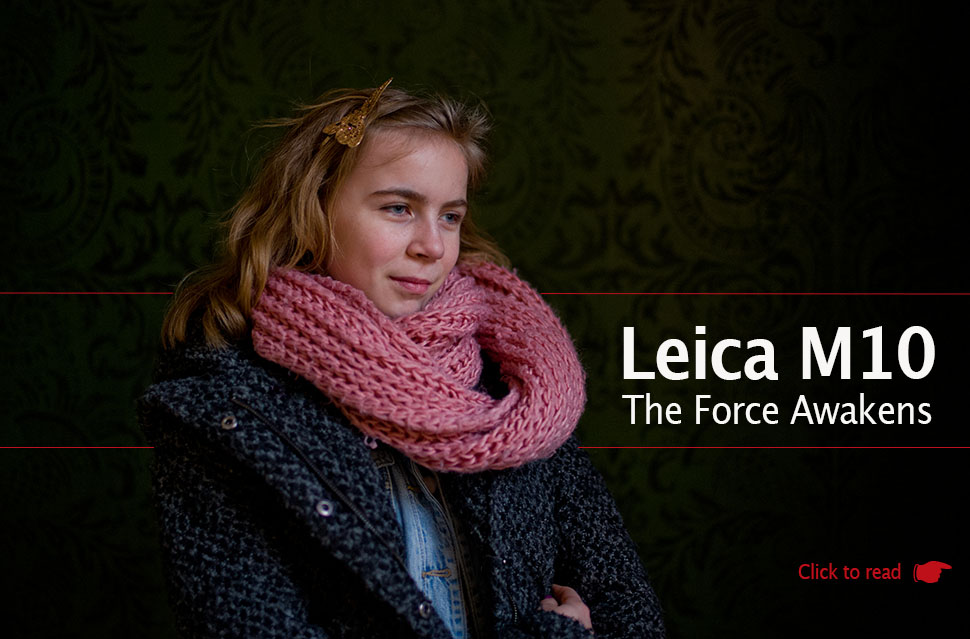
→ 5 months, 20,000+ pictures, 12 countries, the Leica M10 review by Thorsten Overgaard is now online:
Let’s start with the bottom line: The Leica M10 is worth having. That is the short and sweet conclusion you might have come here to find out about. The Leica M10 is the most relevant digital Leica M of them all. I wasn’t overly impressed and enthusiastic to begin with, but none of that takes away from the fact that you’ll love the M10 after a few months. I don’t remember another camera that grew on me like that. Just slides in under your skin for no apparent reason…
Only when we consider that there are other Leica M models that are nice to have, and that the Leica M10 is still extremely hard to find in stock in any camera store, does the decision-making process become a little more cluttered. Which to get? I will get into that as we move on, but as a single statement, you may take this with you:
Yes, the Leica M10 is worth having.
→ Lensrentals also published their Leica M10 review:
Leica made a fantastic camera in the Leica M10. It’s the most classic Leica I’ve seen in years, and it plays to all their strengths, while still maintaining all Leica look and feel that so many have come to love. With mirrorless cameras so plentiful and much cheaper than Leica, it’s hard to justify the price for a Leica in the modern age. Sony and Fuji have made some amazing cameras at less than half the price of a Leica, and there are adapters to use M mount lenses on those cameras. But the romance of rangefinder work has its merits and is worth trying once or twice, maybe just for a weekend. I’m glad Leica got back to what they’re best at, and I look forward to more of this new “old” direction in the future.
In conclusion, you can be the judge between the high ISO performance between the Leica M10 and GFX 50S. You can clearly see the X-T2’s smaller APS-C sensor can not keep up with the larger sensor cameras at higher ISO, something that won’t bother most cropped sensor shooters. You pay a premium for the luxury of high ISO performance of the Leica and the GFX, something that many of us are unwilling to pay for, myself included. At lower ISO, there is very little difference in visible noise, and the differences I do see have less to do with sensor size, and more to do with the lens I use and how the camera processed the image. What difference you do see between the sensors is micro contrast and dynamic range. As a general rule, larger the sensor the better, but how much better? This again is for another article. This was just a test comparing high(er) ISO performance.